
Building a Practical Technology Roadmap for Small Manufacturers: Beyond the ERP
For small-to-medium manufacturers, growth often feels like a double-edged sword. As order volumes increase, so do operational complexities. A system that once worked smoothly—perhaps a combination of entry-level accounting software, paper shop travelers, and complex Excel workbooks—starts to buckle under the pressure.
To bridge the gap between day-to-day operations and long-term scalability, forward-thinking manufacturers build a technology roadmap.
A technology roadmap isn't an abstract list of expensive tools; it’s a strategic sequence of IT and software investments aligned directly with business goals. For manufacturers utilizing specialized ERP environments like Made2Manage® (M2M), building a roadmap isn't about throwing away existing investments—it's about strengthening the core ERP and strategically layering integrated technologies to eliminate operational bottlenecks.
Pillar 1: Stabilize and Maximize Your ERP Core
Before adding new systems or tools, every successful technology roadmap starts with evaluating and optimizing the foundational layer: your Enterprise Resource Planning (ERP) platform.
For M2M users, the software already houses critical operational data—bills of materials (BOMs), routing, inventory balances, and job costing. However, many manufacturers only utilize a fraction of their ERP's capabilities, treating it primarily as a transactional database rather than a dynamic operational command center.

Core ERP Optimization Focus Areas
· Data Integrity & Standard Work: Clean input equals reliable output. Standardize naming conventions, ensure accurate BOMs, and maintain realistic work-center capacity figures.
· Workflow Automation: Identify manual steps within standard M2M modules (such as order entry, purchasing, or shipping notifications) and automate repetitive data entry.
· Custom Reporting & BI Dashboards: Transform raw database tables into actionable, visual key performance indicator (KPI) dashboards for shop floor visibility, financial variance tracking, and inventory management.
Pillar 2: Connect the Shop Floor with Advanced Production Management
Once your core ERP data is clean and consistent, the next phase of the roadmap focuses on production management integration. The goal here is real-time shop floor visibility—closing the information gap between management offices and the plant floor.

1. Advanced Planning & Scheduling (APS)
Standard ERP scheduling often relies on infinite capacity assumptions, leaving production planners to manually adjust schedules in spreadsheets when machine downtime or material delays occur. Integrating finite-capacity scheduling tools directly with M2M allows planners to:
· Run "what-if" scenarios to evaluate the impact of unexpected rush orders.
· Dynamically adjust job sequences based on real-time machine availability.
· Improve On-Time In-Full (OTIF) delivery metrics.
2. Paperless Data Collection & MES Solutions
Relying on hand-written job travelers means operational data is always delayed. Integrating a Manufacturing Execution System (MES) or direct shop floor data collection extension allows operators to log setup times, run times, scrap rates, and material consumption at the machine level using touchscreens or barcode scanners.
· Instant Costing: Compare actual labor hours against estimated routing standards in real time.
· Reduced Errors: Prevent operators from pulling out-of-date revisions or wrong work orders.
3. Integrated Quality & Maintenance Management
Incorporating quality control checkpoints and preventive maintenance tracking directly into production workflows ensures equipment health and product consistency. Linking equipment maintenance schedules with your ERP prevents scheduling jobs on machines flagged for routine service.
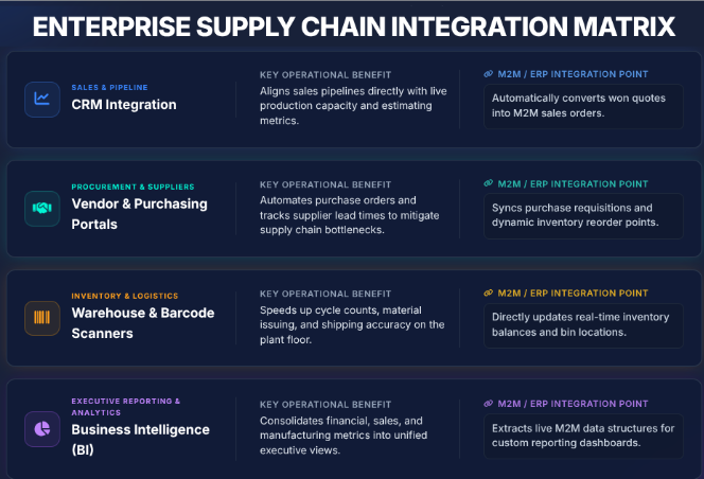
Pillar 3: Extend Connectivity Across the Enterprise Supply Chain
With the shop floor connected to the ERP, the third phase of your roadmap looks outward: connecting your operational engine with suppliers, customers, and business intelligence platforms.
Step-by-Step Execution: How to Build Your Roadmap
Creating an effective technology roadmap requires a deliberate, structured approach. Here is how small-to-medium manufacturers can turn technology vision into a clear, phased action plan:
1. Audit Current Systems & Pinpoint Bottlenecks: Map your end-to-end manufacturing process. Identify where paper, duplicate entry, or manual workarounds cause delays or errors.
2. Prioritize Investments by ROI and Risk: Categorize potential technology projects by strategic value and implementation complexity. Start with quick wins that build organizational momentum.
3. Focus on Integration First: Avoid creating isolated "silos" of technology. Every new software solution should communicate seamlessly with your M2M environment to maintain a single source of truth.
4. Define Clear Project Milestones: Break larger initiatives (like launching a paperless shop floor) into manageable sub-phases with measurable goals.
5. Invest in Change Management & Training: Technology is only as effective as the team operating it. Build hands-on training and ongoing support into every project budget.
Moving Forward with Confidence
Building a technology roadmap isn't about adopting every emerging trend—it’s about choosing the right tools at the right pace to support sustainable, profitable growth. By stabilizing your Made2Manage core and systematically layering production management extensions, your plant can achieve higher throughput, accurate job costing, and complete operational transparency.
Ready to evaluate your current technology ecosystem?
At Cincinnati Software Solutions, we partner with manufacturers to optimize their M2M environment, integrate specialized shop floor technologies, and build custom technology roadmaps tailored to their growth goals. Contact our team today to schedule an operational discovery session.


Comments